

what is pickleball in prison?
Roger BelAir is a retired Seattle businessman who fell in love with pickleball early—and learned the game from the inside out through a close friendship with Barney McCallum, one of pickleball’s founders with deep ties to the sport’s earliest community. Then one Sunday night, after watching a 60 Minutes segment about Cook County Jail, Roger had a simple, stubborn thought: The inmates should be playing pickleball.
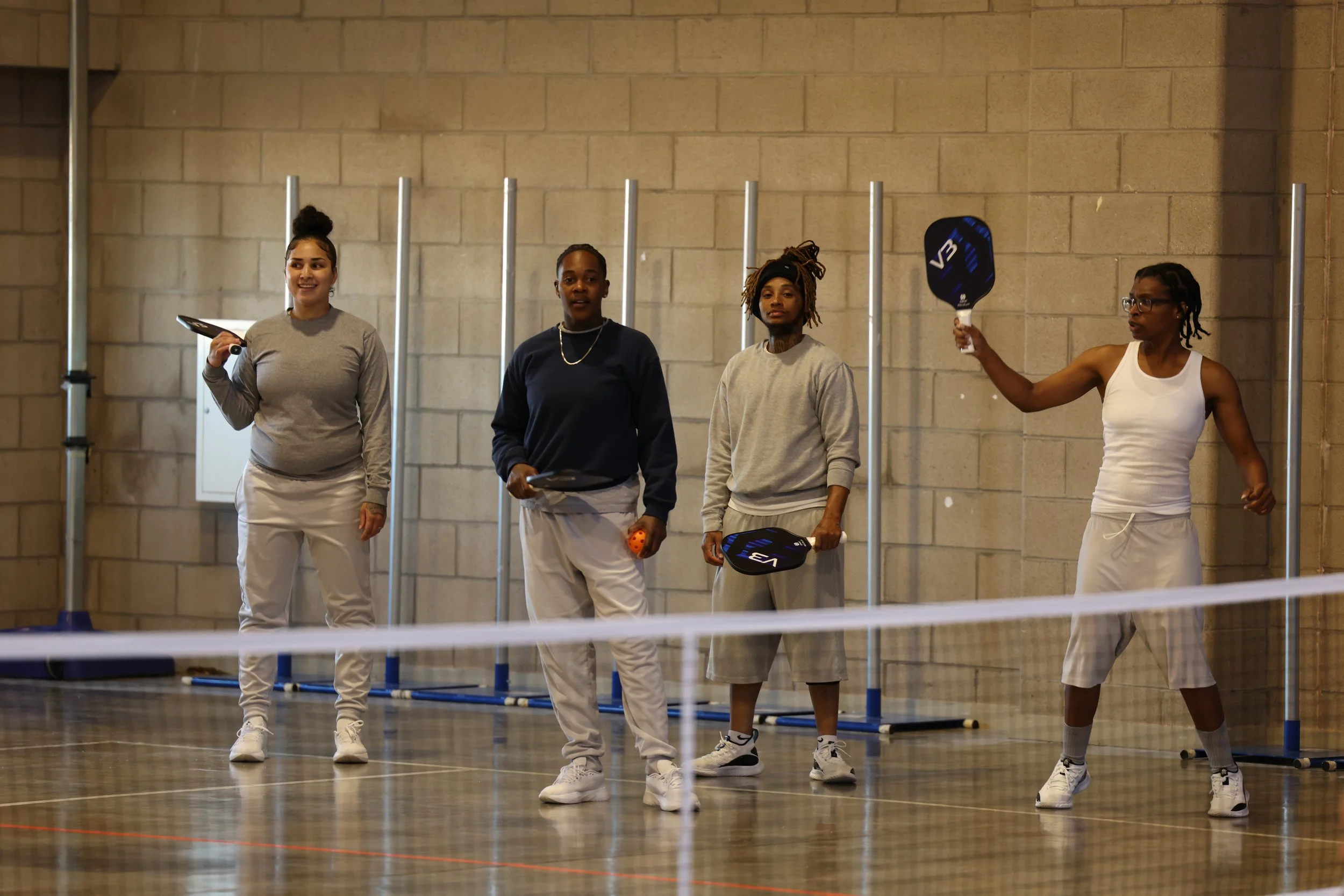
He wrote a letter. He showed up. And what happened next surprised everyone—people who would normally avoid each other started laughing, competing, and learning to communicate under pressure. Pickleball became a rare neutral space: structured, social, rule-bound, and, in the words of one player, a moment where you can “take your mind away from being in prison.”
Since that first breakthrough, Roger has taken Pickleball in Prison into 25 prisons across 7 states, where it’s been embraced not only by incarcerated players—but by wardens and correctional officers, too. In multiple facilities, staff and incarcerated people have played together across the net as part of a broader culture shift toward respect, accountability, and rehabilitation.
Roger often sums up his purpose with a simple question: “95% of all prisoners in the U.S. will eventually be released. What kind of neighbors do we want them to be when they get out?”
Pickleball in Prison is a feature documentary that follows Roger, the program he’s built, and the ripple effects of this simple game—inside the fences and beyond them—through the volunteers he mentors and the communities they help transform.
Today, Roger is doing what he does best: coaching. He’s mentoring a growing network of volunteers—helping them approach facilities, build trust, and start sustainable programs that continue long after the first clinic ends.
That’s how this movement spreads: one paddle at a time, one prison at a time, one volunteer at a time.
Pickleball in Prison™ — Some data
AMERICA & INCARCERATION
The United States holds ~5% of the world’s population but about 20% of the world’s incarcerated people.
The highest incarceration rate of any independent democracy.
RECIDIVISM IN THE UNITED STATES
People released from state prisons who are rearrested:
• 68% within 3 years
• 79% within 6 years
• 83% within 9 years
REENTRY
At least 95% of people incarcerated in the United States will eventually be released.
DIMINISHING RETURNS -THE ROI PROBLEM
Major research reviews find that as incarceration expands, the crime‑reduction returns diminish—while the costs keep rising.
WHAT IT COSTS
Direct spending on policing and incarceration: ~$300 billion per year.
When indirect and societal costs are included, the total burden can reach ~$1.2 trillion annually.
STAFF REALITY—CORRECTIONAL OFFICERS
Prisons nationwide face chronic staffing shortages.
BECAUSE OF THE STRESS INSIDE THE SYSTEM
Life expectancy
• Average American male: 75
• Average correctional officer: 59
WHAT HAPPENS INSIDE DOESN’T STAY INSIDE
Prison culture affects reentry—and public safety.
ROGER BELAIR
“95% of people in prison will eventually be released.
What kind of neighbors do we want them to be when they get out?”